About White Dextrin Powder
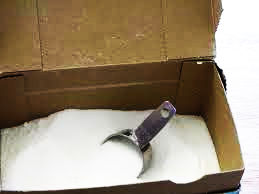
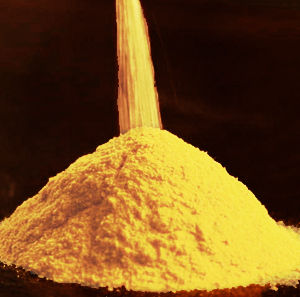
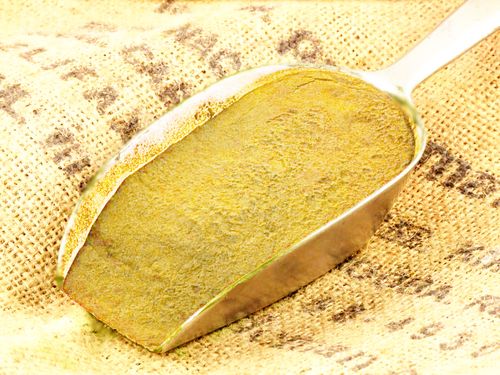
This White Dextrin Powder is made using top quality starch that is processed in hygienic conditions. The starch is hydrolyzed with care to ensure the application effectiveness of our offered powder. The offered White Dextrin Powder is non toxic and friendly to the skin. It is used widely in chemical industry for numerous purposes. It is renowned for its thickness and purity in the marketplace. The affordable rates of this powder collection also makes them shine in the domain.
Applications:-
| INDUSTRY | APPLICATION |
| Textile Industry | Used as textile finishing and coating agent to increase weight and stiffness of textile fabrics |
| Pharmaceutical Industry | Used as a thickening and binding agent in pharmaceuticals and paper coatings |
| Fireworks (Crackers) | Used as pyrotechnic binder and fuel which allows crackers to solidify as pellets or stars |
| Foundries | Used as a binding agent for sand cores in foundry operations. It gives high green bond strength necessary for the mould to remain intact during handling. |
| Mining Industry | Used as an additives in froth flotation |
| Dyeing Industry | Used as a printing thickener for batik resist dyeing |
| Paint Industry | Used as a binder in paint industry |
Product Benefits and ApplicationsWhite Dextrin Powder offers exceptional versatility for industrial purposes, including adhesives, textile sizing, paper manufacturing, and foundry use. Its fine particle size ensures smooth blending in various formulations, while high purity and negligible microbial content guarantee consistent performance. Being odorless and tasteless makes it suitable for processes requiring inert additives. The powders superb shelf life and stable physical properties provide reliability and ease of storage for manufacturers and suppliers.
Packaging and Storage GuidelinesAvailable in sealed HDPE or paper bags with packs of 25 or 50 kg, White Dextrin Powder should be stored in a dry, cool environment to maintain its physical and chemical integrity. Proper storage avoids moisture uptake and prevents degradation of quality. Low moisture content (Max 10%) and nil fat content further support long shelf life of up to 12 months, making inventory management straightforward for industrial users.
FAQs of White Dextrin Powder:
Q: How should White Dextrin Powder be stored to maintain its quality?
A: For optimal quality retention, White Dextrin Powder should be stored in sealed HDPE or paper bags in a cool, dry place. Proper storage practices prevent moisture absorption and preserve its low microbial content and physical properties.
Q: What are the primary industrial applications of White Dextrin Powder?
A: White Dextrin Powder is widely utilized in adhesives, textile sizing, the paper industry, and foundry processes due to its fine particle size, high purity, and partially soluble nature in cold water.
Q: When is White Dextrin Powder preferred over regular starch in industrial processes?
A: It is preferred when a fast-dispersing, low viscosity agent is needed, especially in applications requiring a fine texture and high purity, such as advanced adhesive formulations or precision paper coating.
Q: Where is White Dextrin Powder typically manufactured and exported from?
A: This product is commonly manufactured and exported from India by specialized suppliers and manufacturers, ensuring compliance with international standards for industrial grade materials.
Q: What is the process used to obtain White Dextrin Powder from corn starch?
A: White Dextrin Powder is produced by controlled hydrothermal treatment of corn starch, breaking down its structure into soluble dextrins without introducing additives, thus maintaining a purity above 98%.
Q: How can White Dextrin Powder benefit foundry and paper applications?
A: In foundry applications, the powder acts as a binder, improving mold strength, while in paper manufacturing, it enhances printability and adhesive properties without affecting the papers color or scent.
Q: Is White Dextrin Powder suitable for applications sensitive to taste and odor?
A: Yes, its odorless and tasteless nature makes it suitable for industrial uses where additive neutrality is required, ensuring it does not impact sensory attributes of finished products.







 Send Inquiry

 Send Inquiry
 Send Inquiry
 Send SMS